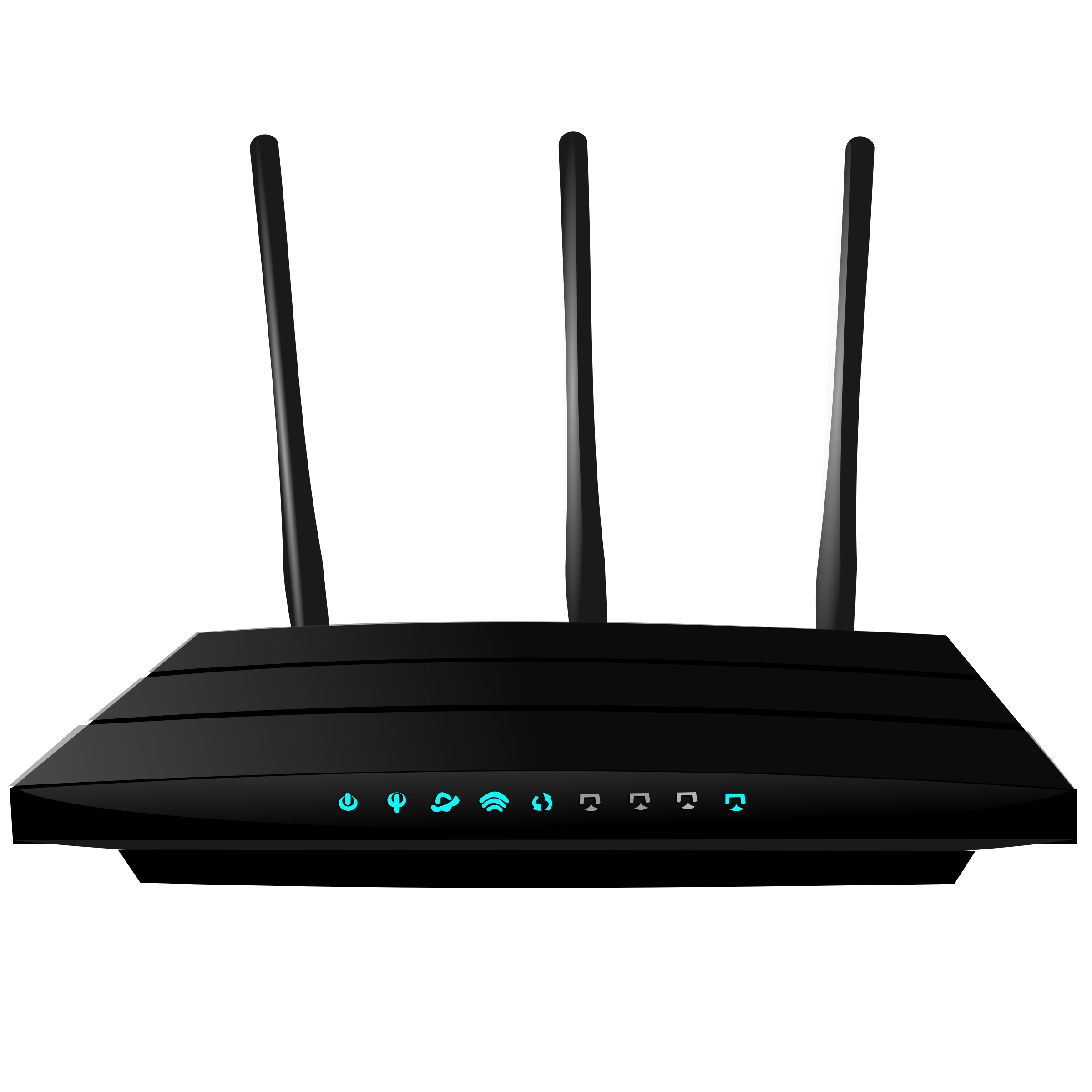
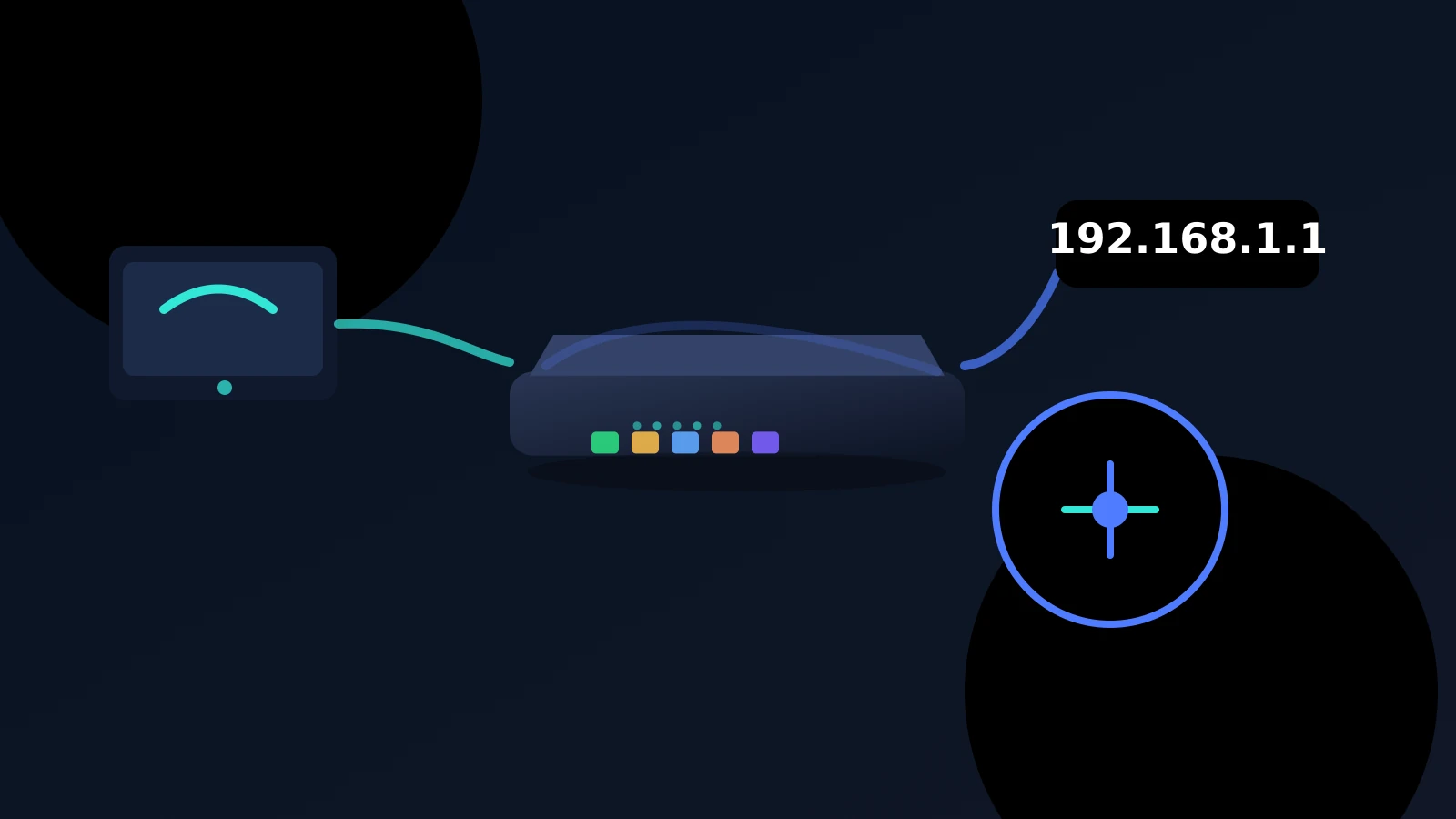
192.168.1.1 — One of the most widely used private IPv4 gateway addresses on home networks. It appears across multiple router families and ISP configurations, so the address alone never identifies a brand, model, username, or password.
Multi-brand home-router gateway: what the address actually means
192.168.1.1 is best understood as a LAN gateway convention, not as a product identifier. Linksys documents 192.168.1.1 for local access on many of its routers, and many other vendors have used the same address on different product generations. A computer whose IPv4 address is 192.168.1.42 with a /24 mask will commonly send internet-bound traffic to 192.168.1.1 as its next hop. Another household can use the exact same private address at the same time because RFC 1918 private space is not globally unique.
Which settings belong to the gateway that answered?
A web interface at this address may expose Wi-Fi names and security, connected clients, DHCP reservations, DNS choices, WAN status, firewall options, guest networking, firmware updates, parental controls, VPN features, port forwarding, IPv6 settings, and logs. The exact menu depends entirely on the router. A page that opens at 192.168.1.1 but lacks Wi-Fi settings may be a modem, upstream gateway, managed access point, or secondary routing device rather than the box you intended to manage.
Identifying the manufacturer before selecting a login method
There is no such thing as a “192.168.1.1 password.” The login belongs to the device responding at that address. Linksys, for example, documents an administrator password for supported router families, while other vendors may use a password created during first-time setup, a device-specific value printed on a label, an ISP access code, or an app/cloud account. If a generic password list disagrees with the label or current manual for your exact model, ignore the generic list.
Why does 192.168.1.1 sometimes open the wrong router?
Homes increasingly contain more than one network device: an ISP gateway, a personal router, mesh nodes, extenders, and smart-home hubs. If both an ISP gateway and a downstream router use overlapping 192.168.1.0/24 LANs, the downstream router normally changes its subnet or the installation develops an addressing conflict. In double-NAT setups, the gateway shown by your laptop is usually the nearest router, not necessarily the ISP modem. When you need the upstream gateway, inspect the WAN/Internet status of the downstream router rather than guessing addresses.
Common typing mistakes
Do not substitute letters for digits. 192.168.l.l, 192.168.I.I, 192.168.1.l, and www.192.168.1.1.com are not the same as 192.168.1.1. Type the numeric address directly into the browser address bar. If your browser searches the web instead, include http:// at the beginning.
Using 192.168.1.1 on a mixed modem-and-router network
When an ISP modem/router and a personal router are both installed, the address 192.168.1.1 can refer to only one device on a given LAN segment. If both devices leave the factory using the same subnet, the downstream router may automatically renumber itself, the installer may change one side, or the network may fail until the overlap is corrected. This is why copying a diagram from another household is unreliable. Read the WAN address of the personal router: if its WAN side receives a 192.168.1.x address while its LAN is something else, 192.168.1.1 is probably upstream. If its LAN clients themselves receive 192.168.1.x addresses, the personal router may be the gateway.
Changing Wi-Fi without locking yourself out
If you are connected wirelessly and rename the SSID, change the passphrase, disable the current band, or change certain security modes, the browser session can drop immediately. That is expected—the client must reconnect using the new Wi-Fi configuration. For firmware updates, LAN subnet changes, or major wireless changes, Ethernet is preferable when available. Before saving, record the new SSID/password and avoid changing several unrelated settings at once.
Static devices and reservations
A 192.168.1.1 gateway often serves DHCP leases from the rest of 192.168.1.0/24. Printers, NAS devices, cameras, game servers and home-automation controllers may need predictable addresses. Prefer DHCP reservations when supported rather than manually assigning random static addresses inside the active DHCP pool. A reservation keeps central control in the router and reduces duplicate-address mistakes.
When 192.168.1.1 conflicts with a work VPN?
Corporate VPNs sometimes advertise routes for private subnets that overlap with a home LAN. If both the home network and the remote network use 192.168.1.0/24, traffic can be ambiguous. A long-term fix may be moving the home LAN to a less-common private subnet, but only if you administer the router and understand which static devices, port forwards, firewall rules and bookmarks must change. Do not change the company VPN routes yourself unless authorized.
Two routers sharing the same factory subnet
A very common two-router case is an ISP gateway using 192.168.1.1 while a personal router also expects 192.168.1.1 on its LAN. The downstream router normally detects the conflict and changes its LAN, fails to obtain a useful WAN address, or creates an ambiguous design. If both devices must route, use non-overlapping subnets and document which one owns port forwarding. If the downstream device is only extending Wi-Fi, access-point or bridge mode usually removes the unnecessary second NAT layer.
Recognizing the upstream box in a double-router setup
- If the login page belongs to an ISP gateway but you expected your own router, inspect the downstream router WAN and LAN addresses before changing passwords.
- If 192.168.1.1 works on Ethernet but not guest Wi-Fi, client isolation or guest-network policy is doing its job; use a trusted LAN connection for administration.
- If a corporate VPN breaks only while at home, compare the VPN remote networks with 192.168.1.0/24. Overlap is common because both sides choose the same default range.
- If a replacement router worked until the old gateway was reconnected, check for duplicated DHCP service and overlapping LAN addresses rather than blaming DNS.
Resolving overlapping modem and router networks
Keep 192.168.1.1 when it is stable and does not overlap anything you need. Change the LAN only for a real reason such as VPN overlap, a second routed segment, address-plan standardization, or migration. Changing the number does not improve Wi-Fi speed. If you do move away from it, update reservations, static devices, firewall objects, local DNS, monitoring, and any saved admin bookmarks in one planned change.
Limiting exposure of the home admin interface
Because 192.168.1.1 is so familiar, phishing-style pages and misleading search ads often imitate router-login language. A legitimate local connection stays inside your own network; it should not require uploading a configuration file to an unrelated website or entering the router password into a search result. Verify the page identity, keep WAN-side remote administration off unless intentionally required, and use the vendor/provider update mechanism for the exact device.
IP conflicts and topology around 192.168.1.1
A 192.168.1.1 address conflict most often appears when a replacement router, VPN, lab subnet, or upstream gateway also uses 192.168.1.0/24; resolve the overlapping networks rather than changing passwords.
Typing 192.168.1.1 correctly
Searches such as 192.168.l.l, 192.168.1.l, 192.168.I.I, and 19216811 usually refer to 192.168.1.1; letters, missing dots, or a web-search result should never replace the numeric address shown by the live default gateway.
Trace which router answers before changing its LAN
Private addresses identify interfaces within a network. Multiple routers can reuse 192.168.1.1 on separate networks, but overlapping connected networks can make the intended destination ambiguous.
- Read the default gateway of the active adapter and disconnect only a VPN you are permitted to pause for the comparison. Official source 1
- Identify the responding model from the interface and compare it with the physical router you intend to manage. Official source 1
- If both an upstream gateway and a downstream router use 192.168.1.0/24, plan distinct subnets and update dependent reservations rather than making unrecorded changes. Official source 1

Illustrative case: an ISP gateway and a new personal router both use 192.168.1.1. Connect to each device separately to identify it, then choose a non-overlapping downstream LAN during a planned change.
Can a private address identify one household or router brand?
No. RFC 1918 addresses can be reused independently. Model and network evidence are required to identify the device.
Documentation and scope