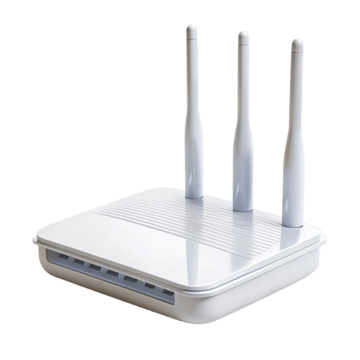

192.168.88.1 — A well-documented MikroTik default address. Current RouterOS documentation shows 192.168.88.1/24 in several factory configurations and identifies 192.168.88.1 as the address opened by Quick Set on configured devices.
MikroTik RouterOS default LAN address: what the address actually means
MikroTik’s current RouterOS manual documents 192.168.88.1/24 on multiple default configurations, including many AP Router/Home-router-style devices. Its Quick Set documentation says the first screen appears when opening the default IP 192.168.88.1 on devices that have an applicable factory configuration. MikroTik hardware spans home routers, CPEs, switches, enterprise routers and specialized wireless equipment, so factory behavior is not identical across the catalog.
What can you configure through MikroTik WebFig and WinBox?
MikroTik devices may be managed using WebFig in the browser, WinBox, command-line interfaces and other RouterOS tools. Quick Set provides a simplified configuration page, while advanced RouterOS menus expose routing, bridges, VLANs, firewall, queues, VPNs, wireless/CAPsMAN-related features and extensive diagnostics. These controls are powerful; make one change at a time and export/backup configuration before major restructuring.
RouterBOARD profiles and device-specific passwords
Current MikroTik default-configuration documentation notes that many configured devices use an admin user protected by a password, while certain “IP Only” configurations historically describe admin with no password. This is exactly why credential claims must be tied to the board type and current documentation. A page about 192.168.88.1 should not flatten every RouterBOARD/RouterOS device into one credential pair.
MikroTik is not always a home-router workflow
Some devices ship as CPEs, bridges, switches, CAPs or IP-only devices. The WAN/LAN roles, DHCP server and firewall defaults depend on that factory configuration. If a tutorial assumes “ether1 is WAN and everything else is LAN,” verify the exact default configuration first.
192.168.88.1 and 192.168.188.1 are both legitimate MikroTik contexts
Current RouterOS documentation shows 192.168.188.1/24 for certain LTE CPE AP router defaults while many other router configurations use 192.168.88.1/24. This is a good example of why even one manufacturer can have multiple correct management subnets.
RouterOS Quick Set versus full configuration
MikroTik’s Quick Set is intended to simplify common setups, but RouterOS remains a full routing platform. After advanced manual changes, repeatedly applying Quick Set can overwrite or conflict with configuration you built elsewhere. New users should choose one workflow deliberately: use Quick Set for a straightforward supported mode, or learn the relevant RouterOS menus/CLI for advanced designs.
Bridge, firewall and NAT relationships
On many factory home-router profiles, LAN Ethernet/wireless interfaces are placed in a bridge, the WAN gets a DHCP client, NAT translates outbound IPv4 traffic and firewall rules protect the router/WAN boundary. Changing which ports belong to the bridge or which interface is WAN can instantly change reachability to 192.168.88.1. Export configuration before restructuring interfaces.
WinBox and MAC-level recovery
MikroTik environments can offer management mechanisms beyond normal IP browser access. WinBox and neighbor discovery can be useful when the IP configuration is unknown, depending on device and interface permissions. Those tools should be used only on equipment you administer. They are not a reason to expose management services to untrusted networks.
Do not generalize one RouterBOARD default to the whole catalog?
The current RouterOS manual lists multiple default profiles: AP routers, CPEs, LTE CPEs, switches, IP-only devices and CAPs. Some use 192.168.88.1; LTE CPE AP routers can use 192.168.188.1. Interface roles and login behavior vary as well. Model/profile identification is essential before following scripts from another MikroTik product.
RouterOS bridges, VLANs and management interfaces
A typical AP Router profile may bridge LAN ports and Wi-Fi behind 192.168.88.1/24 while ether1 acts as WAN, but other boards ship with IP-only or CPE-oriented defaults. Advanced users also build VLAN-aware bridges, multiple VRFs, site-to-site VPNs, and policy routing. After such changes, 192.168.88.1 can be removed entirely. WinBox MAC access can sometimes provide local recovery even when IP addressing is wrong, subject to configuration and model.
Recovering reachability after RouterOS interface changes
- If WebFig does not open but WinBox discovers the router, investigate IP/bridge/firewall configuration before resetting.
- If a VLAN-filtering change locked you out, use the recovery path you prepared—safe mode, console, MAC access, or reset procedure appropriate to the board.
- If RouterOS shows internet on one interface but clients have none, inspect interface lists, NAT masquerade, DHCP, and firewall forward rules rather than changing DNS first.
- If a provider supplied the MikroTik CPE, their configuration can replace factory addressing and credentials completely.
Planning RouterOS changes with a recoverable configuration
MikroTik rewards deliberate configuration and punishes undocumented experimentation. Export the configuration before major bridge/VLAN/firewall changes, make one change at a time, and understand which interface/bridge owns 192.168.88.1. If you only need a basic home router, Quick Set can be appropriate; if you move beyond it, manage the resulting configuration as a real routed system.
Restricting WebFig, WinBox, SSH and API services
RouterOS exposes extensive management services. Restrict WinBox/WebFig/SSH/API access to trusted networks, keep RouterOS and RouterBOOT current, disable unused services, and review firewall input rules after topology changes. A powerful router should not depend on “nobody knows the IP” as a security control.
IP conflicts and topology around 192.168.88.1
The MikroTik 192.168.88.0/24 default can disappear after a custom bridge, VLAN, CAPsMAN/controller, ISP, or WISP configuration, so a reset should not be the first response to a missing 192.168.88.1 page.
Typing 192.168.88.1 correctly
For 192.168.88.1, verify both 88 digits because 192.168.8.1 belongs to a different commonly searched device family and should not be treated as a shortened version of the MikroTik subnet.
Video walkthrough for 192.168.88.1
Useful when a factory router address no longer works: identify the gateway your device is actually using before changing passwords or resetting hardware.
How to Find Your Default Gateway or Router IP Address — YouTube networking tutorial. Watch on YouTube
Useful next steps
Use WebFig and WinBox to separate access from configuration faults
192.168.88.1: mikroTik documents WebFig as a browser management interface. Board defaults and permitted management interfaces vary; 192.168.88.1 is not guaranteed after reconfiguration.
- 192.168.88.1 check: identify the board and current configuration before borrowing a Quick Set procedure. Official source 1
- 192.168.88.1 check: if browser access fails but authorized WinBox discovery succeeds, inspect address assignment, bridge membership and management-service permissions. Official source 1
- 192.168.88.1 check: before bridge or VLAN changes, establish a recovery path and export configuration. Avoid reapplying a setup wizard over a custom design without checking its effects. Official source 1

Illustrative case: enabling VLAN filtering makes the management IP unreachable from an access port. Check whether the management VLAN and CPU/bridge membership remain reachable through the intended path; changing DNS would not explain a local VLAN lockout.
Does WinBox discovery prove that WebFig must be reachable?
No. Discovery or MAC-level access can use a different path from IP web management. Reachability and service permissions must be checked separately.
Documentation and scope