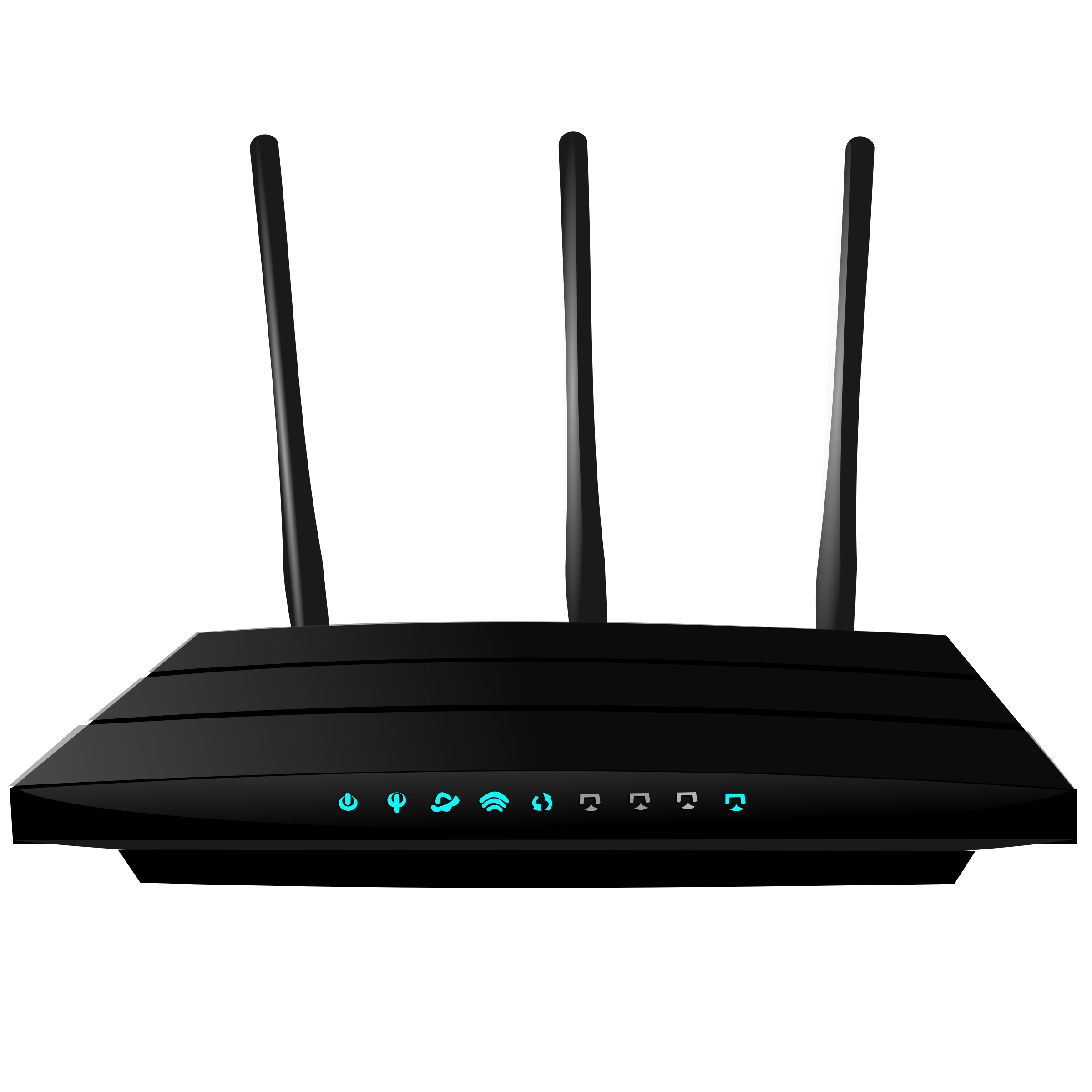
Modern routers can use several radio bands. The best band for a device depends on distance, walls, interference, channel width, client hardware, and what the router supports—not just the largest number printed on the box.
2.4 GHz
It generally travels farther and penetrates obstacles better than higher bands, but has fewer non-overlapping channel options and more interference from neighboring Wi-Fi and other household devices. Many low-cost IoT products support only 2.4 GHz.
5 GHz
It offers much more spectrum and can support wider channels and higher throughput at useful indoor distances. Range normally falls off faster through walls than 2.4 GHz.
6 GHz
Wi-Fi 6E and Wi-Fi 7 devices can use the 6 GHz band where local regulations permit it. The band offers cleaner spectrum and wide channels, but clients and routers must explicitly support it and propagation through obstacles is more demanding.
One SSID or separate names?
Band steering with one network name is convenient and works well in many homes. Separate names can be useful when troubleshooting a device that insists on 2.4 GHz or when you need direct control over band selection.
Choose bands by environment
2.4 GHz generally reaches farther and supports many IoT devices but has less spectrum. 5 GHz offers more channels and throughput at shorter/medium ranges. 6 GHz offers very clean/wide spectrum for Wi-Fi 6E/7 clients but requires compatible hardware and has more demanding propagation.
Channel width tradeoffs
Wider channels can increase peak throughput but consume more spectrum and can perform worse in congested environments. Automatic settings are reasonable starting points; measure before forcing maximum width.
One SSID or separate
Band steering is convenient. Separate SSIDs help troubleshooting/legacy IoT but can reduce seamless roaming convenience.
How to use this concept on a real network?
Map the concept to one packet path: client → local switch/Wi-Fi → default gateway → WAN/ISP → destination. Identify which device performs each function rather than memorizing definitions in isolation. Packet captures, route tables, DHCP leases and router status pages are useful when available.
Common source of confusion
Home routers combine several roles in one box, so people use “router,” “Wi-Fi,” “DNS,” “DHCP” and “internet” interchangeably. Separating the roles makes troubleshooting faster and helps you understand what changes when another router, mesh system or VPN is added.
Connect the concept to packet flow
Start with one client sending one request. The client has a link, an address and a routing table. It decides whether the destination is on-link or must go to a gateway. The local network transports the frame, the router applies routing/firewall/NAT policy as appropriate, and upstream networks carry it toward the destination. DNS can be needed before the first packet if the user supplied a hostname.
Observe instead of guessing
Useful evidence includes the client IP configuration, ARP/neighbor table, routing table, DHCP lease, DNS response, router WAN/LAN status, firewall logs and packet captures where appropriate. You rarely need every tool; choose the observation that tests the current hypothesis.
Home gateways combine roles
A single plastic box can be Ethernet switch, Wi-Fi access point, IPv4 router, IPv6 router, DHCP server, DNS forwarder, NAT device, firewall and VPN endpoint. Understanding which role is failing prevents category errors such as changing Wi-Fi channels to fix a DNS problem.
Topology changes behavior
Add a second router, mesh system, managed switch, VLAN, VPN or ISP gateway and the path changes. Double NAT, overlapping subnets and multiple DHCP servers are topology problems, not mysterious “bad internet.” Draw the path and mark which device owns each role.
Security is part of the model
Isolation and firewall rules can intentionally prevent reachability. A failed connection is not always a fault; it can be policy working correctly. Diagnose from an authorized network segment before disabling security controls.
Wi-Fi-specific evidence to collect
Record band, channel/channel width, RSSI/signal level if available, negotiated link rate, node/access point association and whether the same symptom occurs over Ethernet. A wired control test is especially valuable: if Ethernet is stable while Wi-Fi fails, focus on radio/interference/roaming rather than WAN or DNS.
Client compatibility matters
Old drivers, power-saving behavior, unsupported WPA modes and device-specific roaming decisions can make one client fail while every other device works. Update the client and test another device before changing the whole network around a single endpoint.
Where the simplified explanation stops?
Real networks can include policy routing, IPv6, multiple VLANs, several DNS resolvers, carrier NAT, dynamic routing, tunnels and stateful firewalls. The home-network model in this guide is deliberately practical, not a replacement for the protocol standard or vendor implementation documentation.
Terms that often get mixed together
Addressing, routing, name resolution, switching, wireless access and transport security are related but separate. When a troubleshooting step changes one layer, be explicit about which outcome should change. That discipline makes advanced topics easier later.
Use packet-level evidence when necessary
When basic status pages cannot explain a failure, a packet capture or detailed router log can show whether requests leave, replies return, DNS answers differ, or a firewall resets/drops traffic. Capture only traffic you are authorized to inspect.