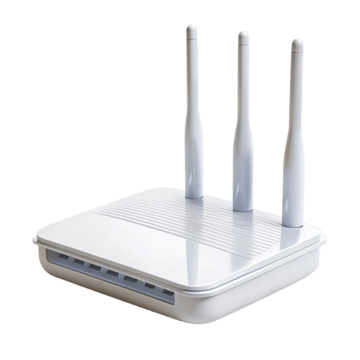
All three devices can make Wi-Fi available in a weak area, but they are not interchangeable. A traditional extender receives an existing Wi-Fi signal and retransmits it, often with limited coordination. A mesh node joins a system designed for multi-node management and roaming. A wired access point turns an Ethernet connection into Wi-Fi at the remote location. The quality of the backhaul path determines how much performance survives.
Extenders, mesh nodes and APs solve different constraints
If Ethernet is available, a wired access point—or a mesh node using Ethernet backhaul—is usually the most predictable solution. If wiring is impossible, a mesh system may manage wireless backhaul and roaming more coherently than standalone extenders. An inexpensive extender can still solve a small coverage gap when expectations are modest and placement is good.
Choosing between a repeater and a wired AP
A garage has weak Wi-Fi but an Ethernet cable already reaches it. A small access point or Ethernet-backed mesh node gives the garage a strong local radio without relying on the weak house-to-garage wireless path. An extender would repeat the very link that is already poor.
Match the coverage fix to the available uplink
- Check whether you can run Ethernet or use existing wired infrastructure before choosing a wireless repeater.
- Place wireless repeaters/nodes where they still receive a strong upstream signal, not at the very edge of failure.
- Compare whether the device creates a separate SSID or coordinates one network.
- Consider whether you need guest networks, VLANs, parental controls, or app management at every node.
- Measure real throughput and roaming after installation instead of relying on signal bars.
Repeated airtime and wired backhaul
Repeating a wireless frame consumes airtime on the backhaul and client side, especially when the same radio/channel handles both. Mesh designs can mitigate this with dedicated radios or intelligent path selection, but they cannot repeal physics. Wired APs move the backhaul load to Ethernet, leaving Wi-Fi airtime for clients.
Avoid placing an extender inside the dead zone
- Buying an extender and placing it inside the dead zone.
- Assuming a stronger SSID signal means the backhaul is healthy.
- Creating many unrelated extenders with different settings and then expecting coordinated roaming.
- Overpaying for mesh when one strategically placed wired AP would solve the problem.
Is an extender the same as mesh?
No. Mesh systems coordinate nodes as one platform, while traditional extenders are usually simpler repeaters.
Does an access point need Ethernet?
Typically yes for backhaul, though some products support wireless bridge/repeater modes as separate functions.
Will mesh improve internet speed?
It can improve the local Wi-Fi bottleneck, but it cannot exceed the WAN service or backhaul limits.
Which is cheapest?
Extenders often cost less initially, but the best value depends on whether they solve the performance/management problem you actually have.